
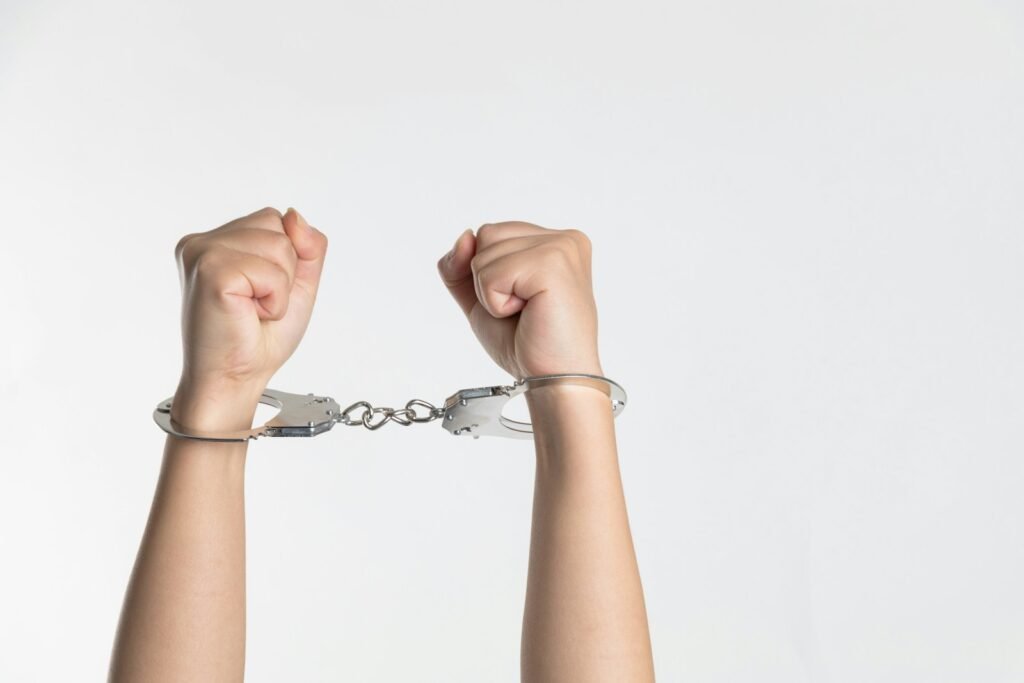
Miami Man Charged With Shooting at Uber Driver, Drug and Gun Offenses
A Miami Gardens man made his initial appearance in federal court Friday after a grand jury indicted him on charges of drug trafficking, discharging a firearm during a drug crime, and illegal firearm possession by a convicted felon, federal prosecutors announced.
Lester Leon Sanders, 47, allegedly fired multiple shots at an Uber driver who had driven away with Sanders’s luggage after witnessing a firearm magazine fall from the defendant’s clothing, according to court documents.
The incident occurred on Oct. 29, 2024. Prosecutors said Sanders reserved an Uber ride. When the driver arrived, Sanders and another man loaded three suitcases into the vehicle. The driver observed a firearm magazine fall from Sanders’s clothing. Sanders then got into the Uber and the vehicle departed.
Shortly afterward, Sanders ordered the driver to stop the car. He got out and began shouting. The driver, concerned by what he had seen, drove off without Sanders but with the luggage still in the vehicle. Sanders shouted at the driver and fired a gun approximately five times as the driver sped away, according to the indictment.
The driver flagged down police and reported the incident. Officers arrested Sanders a short time later.
Inside the Uber, law enforcement recovered a loaded, large‑capacity firearm magazine, 929 grams of nearly pure cocaine, six pounds of marijuana, ammunition, and drug paraphernalia including a weight scale and multiple small transparent bags. Shell casings were also found in the area where Sanders had fired at the Uber.
“This defendant shot repeatedly at an innocent man who stopped a crime as it was happening,” said Assistant Attorney General A. Tysen Duva of the Justice Department’s Criminal Division. “It was through the bravery of the Uber driver that police were alerted and able stop the movement of almost a kilogram of pure cocaine from hitting the streets of Miami.”
U.S. Attorney Jason A. Reding Quiñones for the Southern District of Florida emphasized the federal response to the combination of drug trafficking and gun violence. “According to the indictment, this defendant arranged a drug deal and then fired multiple shots at a rideshare driver. That kind of alleged conduct turns a drug crime into a life-threatening situation in seconds. Federal law treats that combination seriously, with a mandatory minimum sentence of fifteen years if convicted.”
Sanders is charged with drug crimes, using and discharging a firearm in furtherance of a drug trafficking offense, and illegal firearm possession by a prior felon. If convicted, he faces a mandatory minimum sentence of 15 years in prison and a maximum penalty of life.
An indictment is merely an allegation, and all defendants are presumed innocent until proven guilty beyond a reasonable doubt in a court of law.

Japanese National Sentenced to 20 Years for Trafficking Weapons-Grade Plutonium, Narcotics, and Firearms
A Japanese national was sentenced Tuesday to 20 years in federal prison for conspiring to traffic nuclear materials—including weapons-grade plutonium—from Burma to other countries, as well as for his involvement in international narcotics and weapons trafficking and money laundering, the Justice Department announced.
Takeshi Ebisawa, 61, pleaded guilty to six counts before U.S. District Judge Colleen McMahon in the Southern District of New York. He was also ordered to serve five years of supervised release following his prison term.
According to court documents, the Drug Enforcement Administration began investigating Ebisawa in or about 2019 in connection with large-scale trafficking of narcotics, weapons, and nuclear materials. The investigation continued until his arrest on April 4, 2022.
During the investigation, Ebisawa unwittingly introduced an undercover DEA agent, who was posing as a narcotics and weapons trafficker, to his international network of criminal associates spanning Japan, Thailand, Burma, Sri Lanka, and the United States. Over three years, Ebisawa and his associates negotiated four sets of transactions with the undercover agent.
In one transaction, Ebisawa attempted to broker the sale of nuclear materials in exchange for military-grade weapons, including surface-to-air missiles, for an ethnic insurgent group in Burma. Prosecutors said Ebisawa intended to sell the nuclear material to an associate of the undercover agent who was posing as an Iranian general in charge of Iran’s nuclear weapons program. After initially offering uranium, Ebisawa proposed supplying plutonium that he described as even “better” and more “powerful” than uranium.
In or about February 2022, Ebisawa and two co-conspirators met with the undercover agent in Thailand, where one of the co-conspirators showed samples of the nuclear materials. Thai authorities seized the samples, which were later transferred to U.S. custody. A U.S. nuclear forensic laboratory determined the samples contained detectable quantities of uranium, thorium, and weapons-grade plutonium.
Separately, Ebisawa attempted to broker the sale of methamphetamine and heroin to the undercover agent in exchange for heavy weapons for another ethnic insurgent group in Burma. Prosecutors said Ebisawa planned for the heroin and methamphetamine to be distributed in the New York market. In or about February 2021, Ebisawa traveled to Denmark to inspect purported weapons, including anti-tank rockets, machine guns, and automatic rifles.
In another transaction, Ebisawa conspired to sell approximately 500 kilograms of methamphetamine and 500 kilograms of heroin to the undercover agent for distribution in New York. In furtherance of that deal, a co-conspirator provided samples in Thailand in June and September 2021 of approximately one kilogram of methamphetamine, with a purity of about 98 percent, and approximately 1.4 kilograms of heroin, with a purity of about 86 to 87 percent.
Ebisawa also laundered $100,000, which the undercover agent described as narcotics proceeds, from the United States to Japan in exchange for a 15 percent commission. In or about November 2021, the DEA transferred $100,000 to U.S. bank accounts controlled by a co-conspirator, and Ebisawa delivered the yen equivalent of approximately $85,000 in cash in Tokyo.
“National security and public safety are the very tenets of DEA’s mission, and this case demonstrates our ability to dismantle the world’s most dangerous criminal networks,” said DEA Administrator Terrance Cole. “Today’s sentence should send a clear message: threatening the United States by trafficking nuclear materials, narcotics, and military-grade weapons will trigger an uncompromising response.”
U.S. Attorney Jay Clayton for the Southern District of New York called the trafficking of nuclear materials “an existential threat to every New Yorker and every American.”
“Takeshi Ebisawa tried to sell uranium, thorium, and plutonium to fuel a purported nuclear weapons program, along with deadly drugs destined for U.S. streets,” Clayton said. “In exchange, Ebisawa hoped to procure battlefield weapons for insurgent groups and profit for himself.”
Chinese National Extradited from Guatemala to Face U.S. Charges of Drug Trafficking, Money Laundering, and Terrorist Financing
A Chinese national accused of conspiring to smuggle cocaine into the United States, launder drug proceeds, and provide material support to a designated foreign terrorist organization has been extradited from Guatemala to face federal charges in Virginia, the Justice Department announced Tuesday.
Wenshen Xu was extradited on Jan. 30 and arrived in the United States a day later, according to prosecutors. He is scheduled to appear in federal court in the Eastern District of Virginia to face an indictment charging him with conspiracy to import cocaine, money laundering, and providing material support to the Cártel de Jalisco Nueva Generación, or CJNG, a Mexican drug cartel designated as a Foreign Terrorist Organization by the U.S. government.
According to court documents, Xu and his co-conspirators allegedly used methods including mirror transfers, encrypted communications applications, a serial-number verification system, and trade-based money laundering to move narcotics proceeds on behalf of transnational criminal organizations. Prosecutors said the conspiracy began in at least November 2023 and continued until Xu’s arrest in Guatemala City on July 17, 2025.
Xu also allegedly conspired with individuals in the United States, Colombia, and elsewhere to smuggle multi-kilogram quantities of cocaine into the United States. On or about July 17, 2025, prosecutors said, Xu and others agreed to arrange the transportation of a multi-kilogram cocaine shipment from Cali, Colombia, on behalf of an individual who claimed to represent the CJNG.
The CJNG was designated as a Foreign Terrorist Organization under the Immigration and Nationality Act and as a Specially Designated Global Terrorist under Executive Order 13224 on Feb. 20, 2025.
Xu was arrested by Guatemalan authorities at the request of the United States on July 17, 2025. If convicted, he faces a mandatory minimum sentence of 10 years in prison and a maximum penalty of life.
“Assistant Attorney General A. Tysen Duva of the Justice Department’s Criminal Division and Special Agent in Charge Cindy Marx of the Drug Enforcement Administration’s Special Operations Division made the announcement,” the Justice Department said in a statement.
An indictment is merely an allegation, and all defendants are presumed innocent until proven guilty beyond a reasonable doubt in a court of law.