

Wynn Las Vegas Unveils Dazzling Art Exhibition at NYC’s Exclusive Zero Bond Club

LAS VEGAS – Wynn Las Vegas has unveiled the opening art exhibition at Zero Bond, the exclusive private members club, featuring a diverse collection of masterpieces spanning centuries and artistic movements, the company announced March 11.
The exhibition, curated in collaboration with Heather James Fine Art and conceived with Wynn Design & Development’s President and Chief Creative Officer Todd-Avery Lenahan, represents one of the most comprehensive fine art assemblies for a single-site exhibition in Las Vegas history. The rotating display will feature works from the Impressionist period, early 20th century, post-war era, pop art, contemporary movements, and Asian antiquities dating from A.D. 500 through the 10th century.
“Bringing this remarkable collection to Zero Bond at Wynn Las Vegas is not only a milestone achievement, but also a testament to Wynn’s commitment to fostering artistic expression,” Lenahan said in a statement. “This program is intended to inspire and engage through the compelling power of art.”
The 15,000-square-foot space showcases consignments from an extensive roster of renowned artists, including Pierre-Auguste Renoir, whose “Femme au corsage rouge” is featured, along with works by Ansel Adams, Alexander Calder, Sir Winston Churchill, Winslow Homer, Amedeo Modigliani, and Andrew Wyeth, among others.
The exhibition also includes Japanese and Chinese antiquities from various eras, including the Tang Dynasty and Meiji period. An outdoor sculpture garden overlooking the Wynn Golf Club features monumental works by Herb Alpert, Jim Dine, Jeppe Hein, Joan Miró, and Robert Indiana.
All pieces from the debut collection are available for purchase through Heather James.
Scott Sartiano, founder of Zero Bond and Bond Hospitality, said the collaboration aligns with the club’s core values of thoughtful curation and cultural relevance. “Bringing a collection of this caliber to Wynn Las Vegas gives our members and guests the rare opportunity to experience extraordinary works up close,” Sartiano said. “It is about creating an environment where art is integrated into the setting and becomes part of the overall experience.”
Heather James, operating for more than three decades, has built a reputation for presenting important works across periods and genres through its global network and gallery locations.
Zero Bond at Wynn Las Vegas extends the New York-based private members club concept to the Las Vegas Strip, offering members exclusive access to curated experiences within the luxury resort. Wynn Las Vegas continues to hold the longest-running Forbes Travel Guide Five-Star Awards of any independent hotel company and was recently named to FORTUNE Magazine’s World’s Most Admired Companies list for 2026.
More information on the exhibition is available at zerobondwynn.com.
The Henry Ford Honors American Ingenuity with “Handmade: The Crafting of America” Exhibition
DEARBORN, Mich. – The Henry Ford will open a new exhibition March 21 showcasing more than 100 handmade artifacts that trace the evolution of American craftsmanship from practical necessities to contemporary artistic expressions, the museum announced Wednesday.
“Handmade: The Crafting of America,” running through Jan. 18, 2027, in the Collections Gallery of the Henry Ford Museum of American Innovation, features objects exclusively from the institution’s collections, including folk art, textiles, ceramics, and pottery spanning generations of American making.
The exhibition is part of the museum’s programming commemorating the nation’s 250th anniversary, exploring the ideas, innovations, and movements that have shaped the American story throughout 2026.
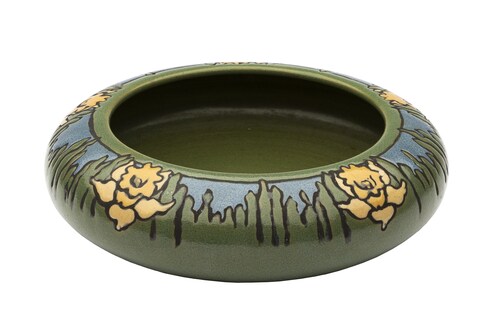
According to the museum, the exhibition examines how handmade objects reflect stories of resilience, resourcefulness, and entrepreneurship across generations. Visitors will explore why Americans create, who they create for, and how craft traditions continue to evolve—from functional objects born of necessity to works pushing artistic boundaries.
Featured artifacts include a 1914 Saturday Evening Girls centerpiece decorated by Sara Galner, representing American art pottery from the Arts and Crafts movement. The ceramic piece displays stylized yellow iris flowers against a green and blue background typical of wares produced by the Saturday Evening Girls and Paul Revere Pottery.
“From practical beginnings to bold modern expressions, ‘Handmade: The Crafting of America’ traces the evolution of American craft and the enduring role of skilled makers in shaping everyday life,” the museum said in a statement.
The Henry Ford, located in Dearborn, encompasses the Henry Ford Museum of American Innovation, Greenfield Village, the Ford Rouge Factory Tour, and the Benson Ford Research Center. The institution holds what it describes as the most comprehensive collection anywhere focusing on innovation, ingenuity, and resourcefulness in America.
For more information, visit thf.org.
A British Artist Unlocks the Secrets of Van Gogh’s Asylum — Where Madness Met Masterpiece
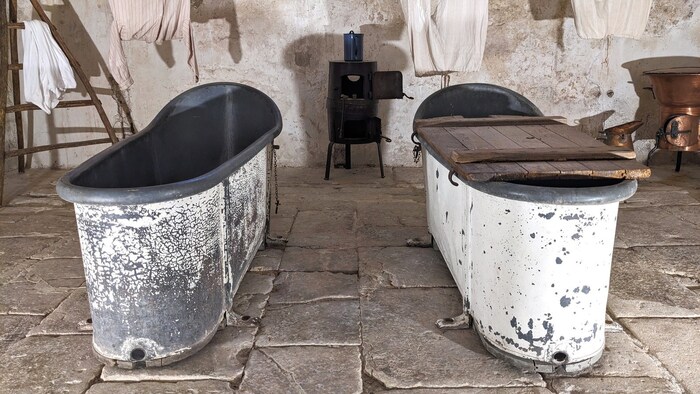
SAINT-RÉMY-DE-PROVENCE, France — A seldom-seen section of one of Europe’s most important artistic sites is receiving renewed interest following British artist Harry MC’s documentation of the interior areas at Saint-Paul-de-Mausole, the former psychiatric hospital where Vincent van Gogh resided and created art in 1889–90.
The first-floor areas of the Provençal asylum—previously inaccessible to the public for many years and just recently opened—feature Dr. Théophile Peyron’s office, a 19th-century pharmacy, tiled hallways, nuns’ sleeping quarters, and the hydrotherapy baths mentioned in Van Gogh’s correspondence. On a recent research expedition, Harry MC captured detailed photographs of these spaces, becoming one of the first contemporary artists to thoroughly explore the rooms since their reopening.
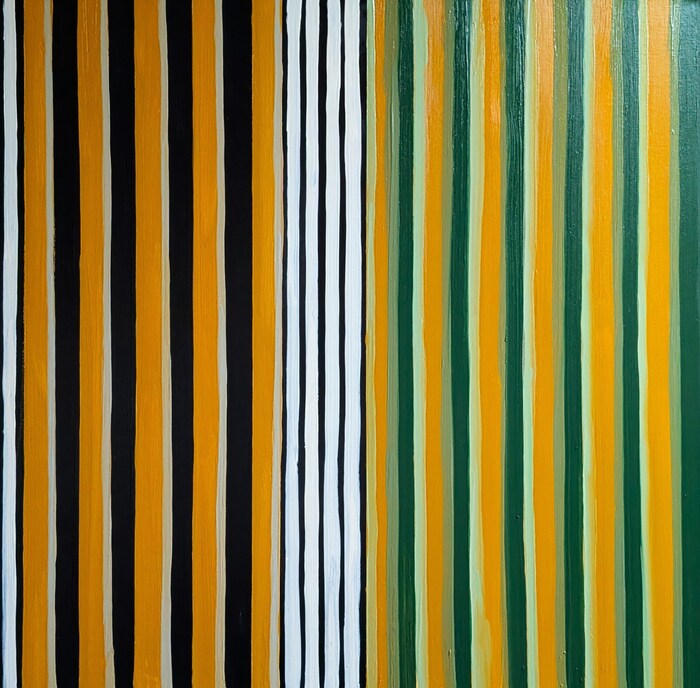
Rather than approaching the site as a historian, the Bath-based painter used the interiors as source material for a new body of work. Known for his vertical stripe paintings, Harry MC translated the architecture, light, and atmosphere of the asylum into a series of small, intimate canvases inspired by the rhythms of tiled floors, shuttered windows, and shifting Provençal light.
“The moment I stepped onto the first floor, everything felt naturally geometric,” the artist said. “Corridors receding into doorways, flagstones underfoot, warm and cool stripes of light across the walls—it all read as abstraction.”
Among the most striking spaces is the hydrotherapy room, which still contains original galvanized steel bathtubs set above worn stone floors. In an 1889 letter to his brother Theo, Van Gogh wrote of alternating hot and cold baths as part of his treatment. Nearby rooms retain period details, including pharmaceutical bottles and ochre-toned furnishings, offering a rare glimpse into the daily routines of late 19th-century psychiatric care.
The resulting paintings differ from Harry MC’s larger works—some of which reach 10 feet in height—favoring instead smaller formats that mirror the intimacy of the rooms themselves. The color palette draws from the surrounding olive groves and interior walls, with stripes that sharpen and blur across the canvas, reflecting movement between landscape and architecture.
Saint-Paul-de-Mausole remains a popular cultural stop in Provence, particularly for travelers tracing Van Gogh’s final years in the region. The opening of these upper-level rooms adds a new layer to the visitor experience, revealing spaces long hidden from view and offering fresh perspective on one of art history’s most studied figures.