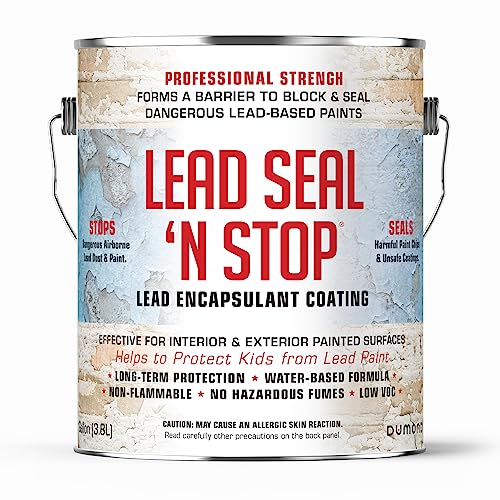
Lowe’s Home Centers LLC has consented to pay a civil penalty of $12.5 million and implement extensive compliance reforms to resolve federal accusations that its contractors breached national lead paint safety regulations during renovation projects at numerous homes throughout the United States.
The Justice Department and the Environmental Protection Agency revealed the proposed settlement on Tuesday, indicating that the violations mainly took place between 2019 and 2021 and were due to noncompliance with the EPA’s Lead Renovation, Repair and Painting (RRP) rule. This rule mandates that certified contractors employ lead-safe practices when renovating homes constructed before 1978, the year when lead-based paint was still prevalent.
Officials noted that Lowe’s contractors did not adhere to these standards, even after a 2014 consent decree that mandated the company to enhance its oversight.
“Careless handling of lead paint endangers the health of children and other Americans,” said Principal Deputy Assistant Attorney General Adam Gustafson of the Environment and Natural Resources Division. “The stiff penalty Lowe’s will pay reflects the importance of using certified firms and contractors in older home renovations.”
Acting EPA enforcement chief Craig Pritzlaff said the company’s failures placed families—especially infants and young children—at risk. “Lowe’s will help protect their customers from the harmful effects of lead by ensuring that renovation work in homes built before 1978 is conducted by certified contractors using lead-safe practices,” he said.
Under the settlement, Lowe’s must implement a nationwide program to confirm that any firm or installer it hires is properly trained and certified to prevent the spread of lead dust and paint chips. EPA investigators uncovered violations through company compliance reports submitted under the earlier settlement, as well as from a public tip regarding renovation work in Southern and Central California.
Lead-based paint was banned for residential use in 1978, but it remains in millions of older homes. When disturbed, lead dust can trigger serious health problems, including developmental delays, behavioral disorders, seizures, and, in severe cases, death. Children are especially vulnerable due to their developing nervous systems.
The consent decree was filed in U.S. District Court for the Central District of California and will undergo a 30-day public comment period before receiving final court approval.
Four years before the government announced its latest action against Lowe’s, Home Depot—its largest competitor—had faced a similar enforcement effort by the U.S. Environmental Protection Agency and the Department of Justice. Federal officials had revealed a proposed nationwide settlement with Home Depot U.S.A. Inc. over alleged violations of the EPA’s Lead Renovation, Repair and Painting (RRP) Rule tied to renovation work performed by the company’s contractors across the country. The states of Utah, Massachusetts, and Rhode Island, which run their own EPA-authorized RRP programs, joined the case.
The settlement, filed as a consent decree in the U.S. District Court for the Northern District of Georgia, required Home Depot to adopt a sweeping corporate compliance program to ensure that any firm or contractor it hired was properly trained and certified to use lead-safe practices. Home Depot also agreed to pay a $20.75 million civil penalty — the largest ever secured under the Toxic Substances Control Act. Of that amount, $750,000 went to Utah, $732,000 to Massachusetts, and $50,000 to Rhode Island.
“These were serious violations,” said Jonathan D. Brightbill, then Principal Deputy Assistant Attorney General for the Justice Department’s Environment and Natural Resources Division. He said the record penalty underscored the importance of hiring certified contractors for renovation work in homes built before 1978, when lead-based paint was common. “These contractors have the training to recognize and prevent the hazards that can be created when lead paint is disturbed,” he said.
Susan Bodine, who served as EPA’s assistant administrator for enforcement, said the agreement would “significantly reduce children’s exposure to lead paint hazards,” noting that Home Depot was required to adopt system-wide changes to ensure its contractors were certified and compliant. “EPA expects all renovation companies to ensure their contractors follow these critical laws that protect public health,” she said.
EPA officials discovered the alleged violations after investigating five customer complaints involving Home Depot renovations in Illinois, Maine, Michigan, Minnesota, and Wisconsin. Those reviews showed that subcontractors in several cases failed to use lead-safe work practices, conduct post-renovation cleaning, distribute required lead-based paint information to residents, or maintain necessary documentation.
A broader audit of Home Depot’s records revealed hundreds of instances in which uncertified firms were dispatched to perform work that required trained personnel. EPA also found cases in which the company failed to maintain or provide documentation that would show contractors were certified, trained, and compliant with lead-safety requirements.
For the most serious violations, Home Depot offered customers inspections by certified professionals and paid for specialized cleaning when dust-lead hazards were detected.
Under the settlement, Home Depot agreed to launch a company-wide compliance system to verify contractor certifications, require contractors to complete detailed checklists documenting lead-safe practices, conduct thousands of on-site inspections, and respond to customer complaints. When contractors failed to follow lead-safe requirements, the company was required to investigate, inspect for hazards, and arrange specialized cleanings. EPA monitored Home Depot’s response to complaints.
Home Depot also committed to expanding public education efforts by sharing lead-safe renovation information with both professional and do-it-yourself customers in stores, online, and through YouTube and workshop programs. While the RRP Rule does not apply to homeowners working on their own properties, EPA recommends using lead-safe practices for do-it-yourself projects.
Lead-based paint was banned for residential use in 1978, but it remains prevalent in millions of older homes. When disturbed, it can produce dust that can cause serious health problems — including behavioral and learning disabilities, seizures, and even death — with young children at greatest risk because their nervous systems are still developing. Health officials advise parents who suspect exposure to seek blood lead testing for their children.