Fake Native American Artist Pleads Guilty to Selling Counterfeit Indian Art
Jose Martinez, who operated as Joseph Skywolf of Skywolf’s Gallery, admitted to misrepresenting artwork as authentic Native American-made products under the federal Indian Arts and Crafts Act.
A man who falsely claimed Native American heritage while selling counterfeit Indian artwork has pleaded guilty to a felony violation of the federal Indian Arts and Crafts Act, the U.S. Attorney’s Office for the District of Nevada announced.
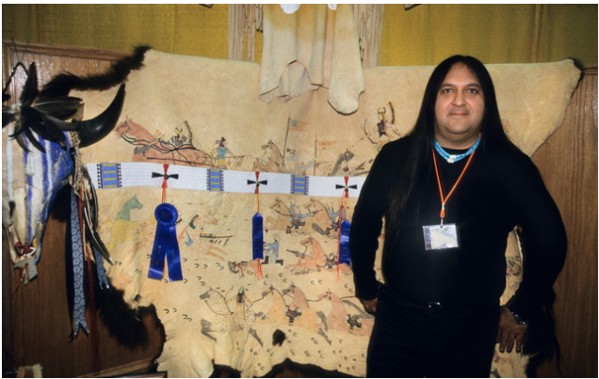
Jose Martinez, who did business as Joseph Skywolf of Skywolf’s Gallery, entered the plea on Nov. 3, 2026. According to statements made in court, Martinez offered and displayed for sale artwork — including headdresses, jewelry, paintings and beaded tanned hides — that he falsely represented as made by an Indian or a specific Indian tribe.
The conduct occurred from about Dec. 7, 2023, through Dec. 10, 2024, prosecutors said. Chief U.S. District Judge Andrew P. Gordon sentenced Martinez to 24 months of supervised probation and ordered him to pay $14,100 in restitution.
The Indian Arts and Crafts Act, PL 101-644, is an anti-counterfeiting law that protects Indian artists and consumers. The Indian Arts and Crafts Board of the U.S. Department of the Interior is responsible for administering and enforcing it.
“Authentic Indian art and craftwork is an important tool for passing down cultural traditions and artistic skills from one generation to the next,” said IACB Director Meridith Stanton.
Stanton said Martinez falsely claimed to be Chiricahua Apache, Apache, Navajo and Native American while selling his counterfeit art, undercutting authentic Indian artists and Indian economies, culture and traditions. Through sales made from his mobile Skywolf’s Gallery, his previous gallery in Jackson, Wyoming, and at various Indian art markets and venues across the West, Southwest and Plains regions, he deceived consumers and eroded the integrity of the Indian art market, she said.
San Francisco Woman Fined $10,000 for Selling Counterfeit Native American Jewelry
Molly Breivis admitted to importing jewelry from Asia and falsely selling it as Apache, Laguna, Navajo and Zuni work on eBay, ignoring two federal warnings.
A San Francisco woman convicted of selling counterfeit Native American jewelry was ordered to pay a $10,000 fine Wednesday in federal court in Phoenix.
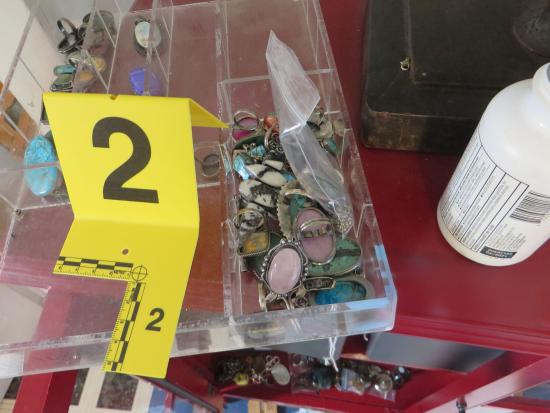
Molly Breivis, 57, was sentenced by U.S. Magistrate Judge Alison Bachus to time served in addition to the fine. Breivis pleaded guilty the same day to misrepresentation of Indian-produced goods of less than $1,000. Under her plea agreement, she agreed to issue a public letter of apology to the Native American community that will be published on the Indian Arts and Crafts Board website.
According to prosecutors, Breivis fraudulently sold Native American jewelry online between about 2020 and 2024 through her eBay store, claiming the pieces were produced by Apache, Laguna, Navajo or Zuni artists. The jewelry was actually imported from Asia and was not made by Native American artists.
Breivis received two warning letters from the U.S. Fish and Wildlife Service, through the IACB, telling her that selling counterfeit Native American jewelry violated the Indian Arts and Crafts Act. She ignored both. In total, Breivis admitted to selling more than $92,000 in counterfeit jewelry.
In her apology letter, Breivis wrote that she recognized her conduct harmed customers and Native American artists, artisans and businesses that depend on the sale of authentic work, and that it undermined confidence in the market for authentic Native American jewelry.
“The deliberate misrepresentation and sale of counterfeit Native American jewelry, as seen in this case, inflicts real harm on both the marketplace and the cultural heritage of Native American artists and tribes,” said Doug Ault, assistant director of the U.S. Fish and Wildlife Service Office of Law Enforcement. “These fraudulent practices deceive consumers and undermine the economic wellbeing of Native American communities.”
IACB Director Meridith Stanton said the board is responsible by statute for administering and enforcing the Indian Arts and Crafts Act, a truth-in-marketing law intended to remove counterfeit Indian art from the marketplace to protect Indian artists, economies and cultures, as well as consumers nationwide.
“By selling imported jewelry from Asia misrepresented as authentic Apache, Laguna, Navajo, and Zuni jewelry through her eBay store, Breivis undercut the livelihoods and traditions of these Tribes and the integrity of their artists’ creative work and defrauded vulnerable customers,” Stanton said.
Case number: CR-26-00846-PHX-ASB
About the Author