CAPE CANAVERAL, Fla. — NASA prepared to move its massive Space Launch System (SLS) rocket and Orion spacecraft to the launch pad for the Artemis II mission, marking another major step toward returning astronauts to the Moon.
The agency said it targeted no earlier than 7 a.m. EST Saturday, Jan. 17, to begin rolling the fully stacked SLS and Orion from the Vehicle Assembly Building to Launch Pad 39B at Kennedy Space Center. The four-mile trip took up to 12 hours as NASA’s crawler-transporter carried the 11-million-pound vehicle at roughly one mile per hour.
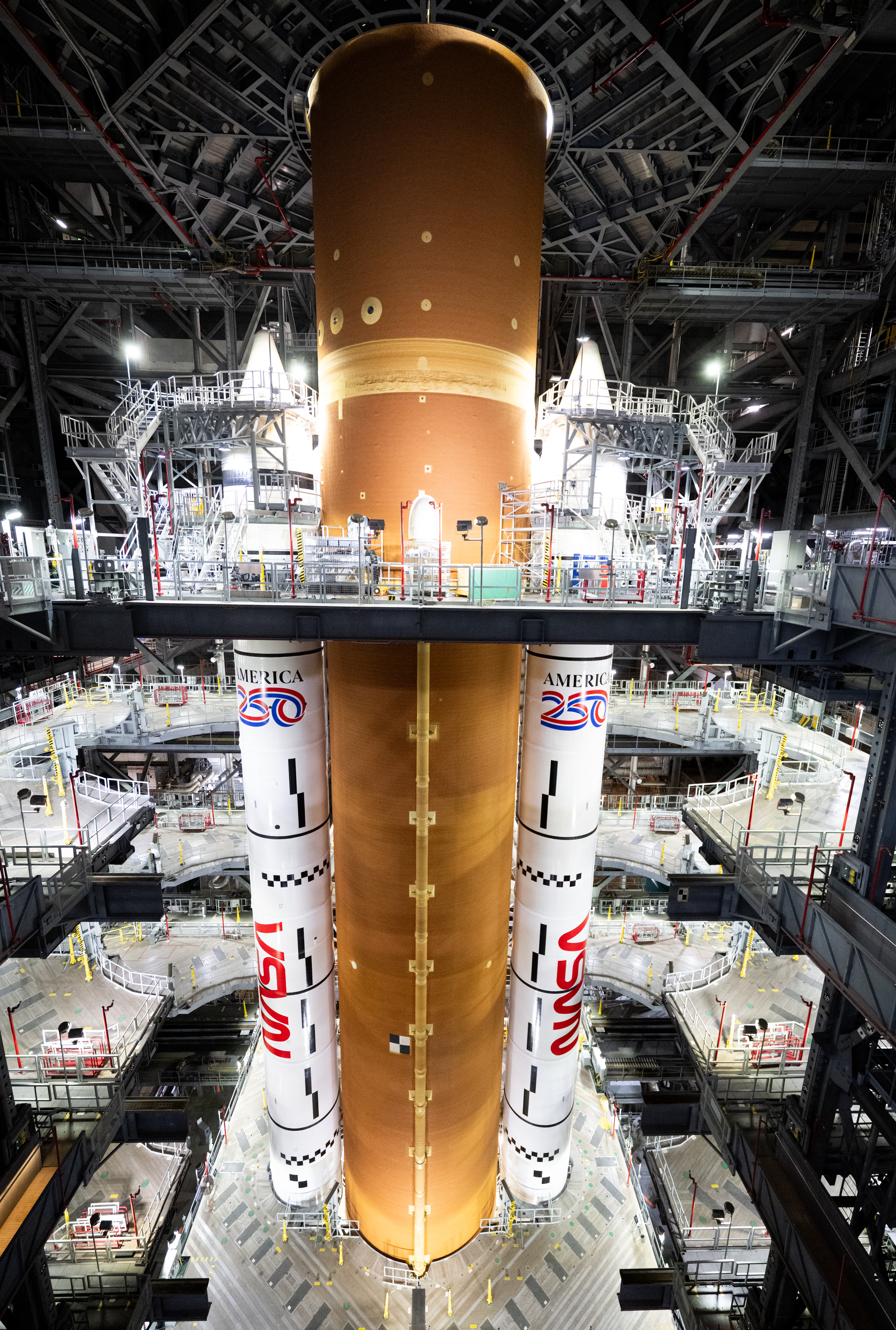
Credit: NASA/Joel Kowsky
The rollout time was subject to change depending on weather and final technical preparations, NASA officials said.
Artemis II was set to be the first crewed mission of NASA’s Artemis program, sending astronauts around the Moon and back to Earth. The mission’s launch window could open as early as Feb. 6, pending completion of final testing and a wet dress rehearsal of the rocket, spacecraft, and ground systems.
Ahead of the rollout, NASA held a mission overview news conference at noon Friday, Jan. 16. Speakers included Artemis II mission managers, launch officials, and science leaders. Live coverage of the rollout began at 7 a.m. Saturday, followed by a 9 a.m. media event with NASA Administrator Jared Isaacman and the Artemis II crew.
The four-person crew included NASA astronauts Reid Wiseman, Victor Glover, and Christina Koch, along with Canadian Space Agency astronaut Jeremy Hansen. They answered questions about their training and the upcoming mission from Kennedy Space Center’s countdown clock.
Once at the pad, NASA began final preparations and noted the rocket could be rolled back to the assembly building if additional work was needed. Officials said the mission management team would evaluate overall flight readiness before setting a final launch date.
The Artemis II mission represented a key milestone for NASA’s long-term lunar exploration strategy. Through the Artemis program, the agency aimed to establish a sustained human presence on the Moon and lay the groundwork for future crewed missions to Mars.
About the Author