New Jersey Company Fined $8 Million After Deadly Air Conditioner Defects Linked to Fires Go Unreported
A New Jersey-based appliance company has been sentenced to pay an $8 million criminal fine and nearly $396,000 in restitution after admitting it failed to report dangerously defective air conditioners linked to dozens of fires and one death, federal authorities announced.
Royal Sovereign International Inc., which also did business as Royal Centurian Inc., was sentenced for failing to notify the U.S. Consumer Product Safety Commission (CPSC) about safety hazards involving air conditioners it imported and sold in the United States. The company sold more than 33,000 units manufactured in China between 2008 and 2014.
According to court documents, the air conditioners contained a defective drain motor that could short circuit, causing the units to ignite and burn uncontrollably. Federal officials said the defective products were allegedly associated with more than 40 fires.
The company admitted it willfully failed to report the safety risks to regulators. Prosecutors said Royal Sovereign misled the CPSC in November 2010 by stating it was aware of only two fire incidents and that it had stopped selling the units. In reality, the company knew of at least 16 fires and continued selling the products, according to court records.
A CPSC recall notice later confirmed that a fire involving one of the air conditioners resulted in the death of a woman from smoke inhalation in August 2016 and injuries to her two children.
“Royal Sovereign’s failure to report a deadly defect led to tragedy, including the death of a mother and serious injuries to her children,” said CPSC Acting Chairman Peter A. Feldman.
As stated in the recall notice, a woman tragically lost her life in August 2016 due to smoke inhalation, while her two children sustained injuries when their Royal Sovereign air conditioner ignited. Following the guilty plea, Royal Sovereign must pay $395,786.48 in restitution to the victims.
Royal Sovereign pleaded guilty in August 2025 to a criminal information under the Consumer Product Safety Act. In addition to the criminal penalty and restitution order, the company previously agreed to a civil settlement that included a $16,025,000 penalty, the maximum allowed under federal law. The company has since permanently ceased all operations involving the marketing, sale, or distribution of consumer products.
Sewage Spill of 200 Million Gallons Triggers Federal Lawsuit Against DC Water
The U.S. Department of Justice has filed a federal lawsuit against DC Water and the District of Columbia, alleging violations of the Clean Water Act after a major sewer line collapse released more than 200 million gallons of untreated sewage into the Potomac River earlier this year.
The civil complaint, filed on behalf of the Environmental Protection Agency, centers on the January 2026 failure of the Potomac Interceptor, a critical sewer line that carries tens of millions of gallons of wastewater daily from parts of Maryland, Northern Virginia, and Washington, D.C.
Federal officials say the collapse exposed longstanding failures in maintenance and operation. The lawsuit seeks financial penalties and mandates for system-wide repairs, including new infrastructure projects and an enhanced maintenance plan aimed at preventing future discharges.
“DC Water’s failure to maintain the Potomac Interceptor resulted in raw sewage flowing into the Potomac River and the surrounding environment, posing a direct risk to public health,” said Adam Gustafson, Principal Deputy Assistant Attorney General for the Justice Department’s Environment and Natural Resources Division.
The interceptor collapsed on Jan. 19 near Lock 12 in the C&O Canal National Historical Park in Montgomery County, Maryland. In the days that followed, crews worked to divert wastewater around the damaged section, installing temporary pumps and rerouting sewage through parts of the historic canal.
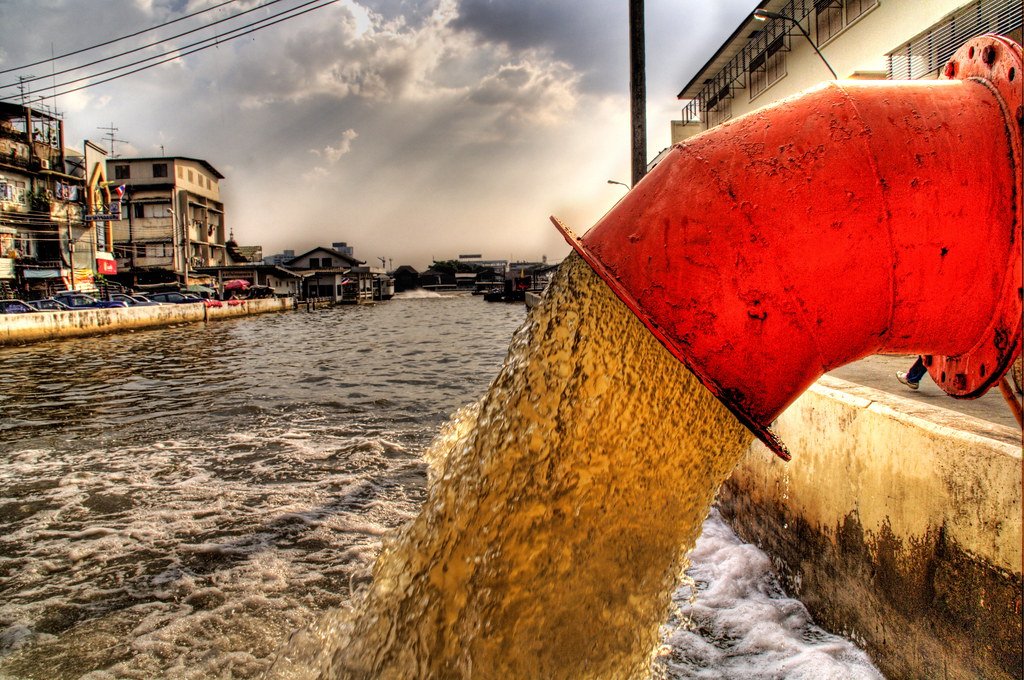
However, those emergency measures proved unreliable. High-powered pumps used in the diversion effort frequently clogged with debris such as wipes and rags, forcing shutdowns. On Feb. 8, officials reported that at least 500,000 gallons of sewage spilled directly into the Potomac River during one such failure.
The broader incident resulted in what federal authorities describe as an unauthorized discharge exceeding 200 million gallons of untreated sewage, contaminating waterways and raising concerns about environmental damage and human health risks.
Following the incident, a federal emergency declaration prompted assistance from the U.S. Army Corps of Engineers, which helped implement mitigation efforts, including stormwater diversions to prevent further spread of pollutants.
According to the complaint, DC Water is responsible for operating and maintaining the interceptor system and failed to do so in a way that prevented sewage releases into the river and nearby areas where public exposure is possible.
About the Author