Before the Runway, There Was the Ring: LeRoy Neiman’s Lost Rhythms Return—And Suddenly, Art Feels Alive Again
Color, Motion, and Modern Glamour: LeRoy Neiman Returns to the Spotlight in Winter Park
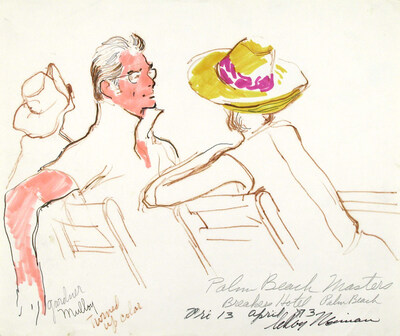
In Winter Park, Florida, a new exhibition serves as a vibrant reminder of the deep connections between art, culture, and spectacle that have existed for ages. At Solana Fine Art, a carefully curated selection of original pieces by LeRoy Neiman is currently on display, showcasing the artist’s distinctive visual style in a more personal, modern environment.
This exhibition includes ten works on paper sourced from the LeRoy Neiman and Janet Byrne Neiman Foundation collection. Although Neiman’s imagery is widely acknowledged, experiencing these original artworks up close provides a fresh viewpoint—one that emphasizes the immediacy of his line work and the richness behind his iconic bursts of color.
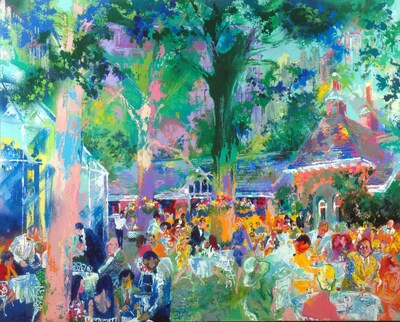
Neiman established his legacy by capturing movement and atmosphere, often centering on realms that revolve around performance: sports, nightlife, and high society. His compositions, filled with dynamic brushstrokes and vibrant colors, documented everything from boxing rings to racetracks, transforming motion into something nearly cinematic. Throughout a career that spanned many decades, he became closely linked with significant cultural and sporting events, including his position as an official artist for several Olympic Games.
Today, the same visual language appears to be more relevant than ever. As fashion increasingly incorporates elements from the aesthetics of sports and spectacle, Neiman’s creations seem less like historical artifacts and more like a pioneering framework for blending athletics, entertainment, and personal style. His vibrant scenes—crowded, dynamic, and often glamorous—reflect the visual languages that still influence modern design and image creation.
This renewed focus on his work aligns with a wider institutional reassessment. Upcoming exhibitions at places like the Pérez Art Museum Miami and the School of the Art Institute of Chicago highlight a rising interest in reevaluating Neiman’s cultural significance, not merely as a recorder of events, but as an artist who played a crucial role in shaping the visual memory of those events.
Thirteen Lenses, One Unspoken Truth: At the Armory, Leica Proves Photography Still Knows How to Hold Time—And Break Your Heart
A Quiet Debut: Leica Gallery New York Steps Onto the AIPAD Stage

In late April, Leica Gallery New York quietly marked its first appearance at AIPAD The Photography Show, held at the Park Avenue Armory. The presentation introduced the gallery to a wider international audience, while maintaining a focus on the work itself rather than the occasion.
The exhibition brought together a group of thirteen photographers, including Alex Webb, Rebecca Norris Webb, Donna Ferrato, and Ralph Gibson. Their images moved across documentary, fine art, and personal narratives, offering a range of approaches without leaning too heavily on any single theme.

Taken together, the works suggested a shared interest in observation and storytelling. Some focused on everyday moments, others on broader social contexts, but all reflected a considered way of seeing. The diversity of styles felt intentional, allowing each photographer’s perspective to remain distinct.
The exhibition also reflected the ongoing influence of Leica Camera AG within photography. Long associated with a straightforward, unobtrusive approach to image-making, Leica’s role here was present but understated—more a point of continuity than a focal point.
Several of the participating artists have been recognized through Leica’s initiatives, including the Leica Oskar Barnack Award and the Leica Hall of Fame Award. These connections added context to the selection, without defining it entirely.
More broadly, the presentation arrived at a time when photography continues to shift in response to new technologies and viewing habits. Within that landscape, the exhibition offered a quieter reminder of the medium’s enduring strengths—its ability to document, interpret, and connect.
About the Author