‘Cryptoqueen’ Still at Large, but Victims Can Finally Claim Their Share of $40 Million Recovered from OneCoin Scam
NEW YORK — Nearly seven years after the global cryptocurrency fraud known as OneCoin collapsed, federal prosecutors announced Monday that more than
$40 Million in forfeited assets is now available to compensate victims—afractionofthe4 billion stolen from millions of investors worldwide.
The Justice Department has launched a remission process for those who bought the fraudulent “cryptocurrency” between 2014 and 2019, when Ruja Ignatova — the elusive “Cryptoqueen” — and her co-founder Karl Sebastian Greenwood peddled a fake digital coin through a global multi-level-marketing network.
“Victims are at the core of everything we do at the Department of Justice,” said Assistant Attorney General A. Tysen Duva of the Criminal Division. “The Department pursues forfeiture to take the profit out of crime and then use that money to compensate victims wherever possible.”
OneCoin, based in Sofia, Bulgaria, never actually operated a blockchain. It was a pyramid scheme dressed in crypto clothing. Yet at its peak, it convinced investors to pour in over $4 billion, making it one of the largest frauds in modern financial history.
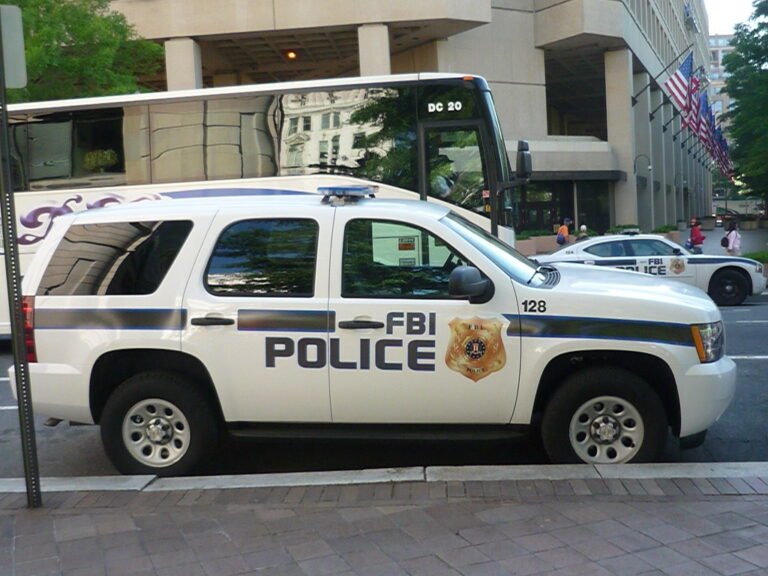
Several key figures have been caught and sentenced. Greenwood was convicted and sentenced to 20 years in prison. Others have pleaded guilty. But Ignatova, the mastermind, remains a fugitive — and an FBI Top Ten Most Wanted.
“The victim losses accrued in this case are monumental,” said James C. Barnacle Jr., assistant director in charge of the FBI New York Field Office. “Misled by falsified statements and empty promises, many unknowingly depleted their savings for a fraudulent investment scheme in an emerging financial ecosystem that would never pay out.”
The FBI is still hunting Ignatova, who disappeared in 2017 after boarding a flight from Sofia to Athens. Tips can be submitted at tips.fbi.gov or by calling 1-800-CALL-FBI.
But for those who lost money, Monday’s announcement offers a rare sliver of relief.
“Today’s announcement marks an important step toward returning funds to those harmed,” said U.S. Attorney Jay Clayton for the Southern District of New York. “While no recovery can fully undo the damage, our Office will continue working to seize criminal proceeds and prioritize getting money back into the hands of victims.”
The Justice Department has set up a dedicated website — www.onecoinremission.com — where victims can obtain a petition form. The deadline to file is June 30, 2026. Victims can also call 1-833-421-9748 or write to the Remission Administrator to request a form.
The $40 Million currently available comes from assets seized through criminal forfeiture. Since 2000, the Justice Department’s Asset Forfeiture Program has returned more than $12.5 billion to crime victims.
“IRS-CI remains steadfast in its mission to follow the money and dismantle complex financial fraud schemes like OneCoin,” said Jenifer L. Piovesan, special agent in charge of IRS-Criminal Investigation, which helped trace the illicit funds.
The compensation process is being managed by the Criminal Division’s Money Laundering, Narcotics and Forfeiture Section, with Kroll Settlement Administration LLC serving as the remission administrator.
A Warning to Victims
Federal officials also issued a stark warning: No one from the Department of Justice or the Remission Administrator will ever ask for payment to participate in the compensation process.
“Please be cautious of any individual or organization claiming to represent the Remission Administrator or the federal government,” the Justice Department said. Scammers have been known to target cryptocurrency fraud victims with fake offers to recover funds.
For those who lost savings to the Cryptoqueen’s empty promises, the clock is now ticking. The deadline is June 30. And while $40 Million cannot erase $4 billion in losses, it is at least a down payment on justice.
He Helped Launder $37 Million from 174 Americans: Chinese National Gets 46 Months in Prison
LOS ANGELES — A Chinese national who helped launder more than $36.9 million stolen from 174 American victims in a sprawling cryptocurrency scam run out of Cambodia was sentenced Tuesday to 46 months in federal prison.
Jingliang Su, whose role in the conspiracy involved converting stolen funds into the stablecoin Tether and funneling them to scam center leaders across Southeast Asia, was also ordered to pay $26,867,242.44 in restitution. He pleaded guilty in June 2025 to one count of conspiracy to operate an illegal money transmitting business.
“This defendant and his co-conspirators scammed 174 Americans out of their hard-earned money,” said Assistant Attorney General A. Tysen Duva of the Justice Department’s Criminal Division. “In the digital age, criminals have found new ways to weaponize the internet for fraud. The Criminal Division and its law enforcement partners have continued to evolve and caught large-scale scammers, who target people through their phones, social media, and fake internet sites, steal from them, and then move their money through cryptocurrency and wire transfers outside of the United States.”
According to court documents, Su was part of an international criminal network that used a sophisticated playbook to bleed victims dry. Overseas co-conspirators contacted Americans through unsolicited social media messages, phone calls, texts, and even dating apps — slowly building trust before pitching fraudulent digital asset investments.
The scammers created fake websites that mimicked legitimate crypto trading platforms. Victims, believing they were investing in real opportunities, sent funds. The fraudsters then showed them fake account balances, making it appear their investments were growing. In reality, the money had already been stolen.
More than $36.9 million in victim funds was transferred from U.S. bank accounts controlled by the conspirators to a single account at Deltec Bank in the Bahamas. Su and his co-conspirators then directed the bank to convert the money into the stablecoin Tether (USDT) and transfer it to a digital wallet controlled in Cambodia. From there, the funds were distributed to scam center leaders throughout the region.
“New investment opportunities may sound intriguing, but they have a dark side: attracting criminals who, in this case, stole then laundered tens of millions of dollars from their victims,” said First Assistant U.S. Attorney Bill Essayli for the Central District of California. “I thank our law enforcement partners for their efforts at bringing this defendant to justice and I encourage the investing public to be cautious. An ounce of prevention is worth a pound of cure.”
So far, eight co-conspirators have pleaded guilty. Among them: Jose Somarriba, sentenced to 36 months, and ShengSheng He, sentenced to 51 months. Both pleaded guilty to conspiracy to operate an unlicensed money transmitting business.
For the 174 Americans who lost their savings to a phantom crypto empire, the restitution order offers a faint glimmer of hope. But as prosecutors noted, the best protection is prevention: be skeptical of unsolicited investment advice, especially from strangers who slide into your DMs.
About the Author