
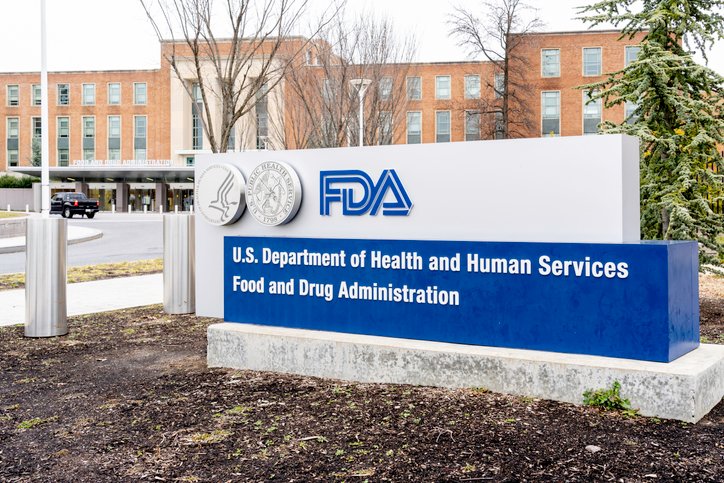
Washington, D.C., USA- January 13, 2020: FDA Sign at its headquarters in Washington DC. The Food and Drug Administration (FDA or USFDA) is a federal agency of the USA.
The U.S. Food and Drug Administration is pressing food retailers and manufacturers to improve how recalls are carried out, following an investigation into a multistate infant botulism outbreak linked to ByHeart infant formula that revealed serious gaps in recall compliance at the retail level.
In a statement released this week, the FDA said it recently sent warning letters to several major retailers for failing to remove recalled ByHeart infant formula from store shelves, despite having been notified of the recall. The agency said the findings raise concerns about recall effectiveness, particularly for products intended for infants and young children.
The FDA’s action follows a voluntary recall initiated by ByHeart Inc. on Nov. 8, 2025, which was expanded three days later to include all ByHeart Whole Nutrition Infant Formula products. The recall was tied to an investigation into cases of infant botulism conducted by the FDA in collaboration with the Centers for Disease Control and Prevention, the California Department of Public Health’s Infant Botulism Treatment and Prevention Program, and state and local health agencies.
In the weeks after the recall began, FDA investigators and state and local partners conducted more than 4,000 retail inspections nationwide to ensure the recalled formula was no longer available for purchase. According to the agency, inspectors continued to find the recalled product on store shelves for more than three weeks in some cases, across more than 175 retail locations in 36 states.
“Food safety is a shared responsibility, and it is of utmost importance that all parties in the supply chain act swiftly and vigilantly to protect our nation’s children from unsafe food,” FDA Commissioner Marty Makary said in a statement.
Under the Federal Food, Drug, and Cosmetic Act, companies across the supply chain are responsible for properly executing recalls. The FDA emphasized that retailers play a critical role as the final checkpoint before products reach consumers, particularly during public health emergencies involving high-risk populations such as infants.
The agency has asked the retailers that received warning letters to respond within 15 days, detailing the steps they have taken to correct the violations and prevent similar failures in the future, or to explain why they believe they are not in violation of federal law.
The FDA noted that this is not the first time it has flagged recall failures at the retail level. Last year, the agency sent a warning letter to a retailer that did not adequately remove recalled lead-contaminated WanaBana apple cinnamon fruit puree pouches from store shelves.
The latest action is part of broader FDA efforts to modernize and strengthen recall systems and communications across the food industry. Earlier this year, the agency called on manufacturers and distributors of infant formula and children’s foods to prioritize recall communications, and it continues those efforts under its Operation Stork Speed initiative, aimed at ensuring infant formula is both safe and reliably available.
The FDA said it has not received any reports of recalled ByHeart formula being found on store shelves since Nov. 26, 2025.
