ALBANY, N.Y. – The New York State Department of Agriculture and Markets and Cornell Integrated Pest Management (Cornell IPM) have issued an urgent call for livestock producers to take proactive measures against the Asian longhorned tick, an invasive pest that continues to expand its presence throughout the Hudson Valley.
Since its first identification in the United States in New Jersey in 2017, the tick has steadily moved northward and is now becoming a serious concern for livestock health across the region. During the 2026 season, established tick populations have been confirmed as far north as the Kinderhook area of Columbia County, with high infestation rates observed in some herds.
State Agriculture Commissioner Richard A. Ball emphasized the growing threat. “Asian longhorned tick is increasingly becoming a concern for our livestock producers, particularly in the Hudson Valley area, where our partners at Cornell IPM have seen a significant uptick in activity,” Ball said. “The good news here is that by being vigilant and taking proactive measures, our producers can keep their animals healthy and safe. I urge all of our cattle, sheep and goat producers to take a look at the ways they can reduce the threat of the longhorned tick and follow their veterinarian’s guidance.”
Cornell IPM Associate Director and Livestock Coordinator Ken Wise detailed the ongoing surveillance efforts. “We are actively and vigilantly monitoring the spread of the Asian longhorned tick across New York State to better understand its distribution, habitat selection and potential impacts on livestock and animal health,” Wise said. “Through ongoing surveillance efforts, we are tracking population levels and providing science-based management recommendations when tick populations reach levels that may pose a risk to animal health and productivity.”
The Asian longhorned tick is particularly concerning because it can reach extremely high populations on individual animals. Large infestations can cause significant blood loss, leading to anemia, reduced performance, and in extreme cases, death of livestock animals. The tick is also capable of transmitting a parasite that causes theileriosis, a disease that can lead to reduced milk production, weakness, weight loss, pale or jaundiced mucous membranes, fever, and even death. Theileriosis has now been detected in cattle in the Hudson Valley, and at least one livestock death associated with the disease has been confirmed in the region.
Sheep and goats may also become infected with the disease, though they do not become clinically ill and serve as “asymptomatic carriers.” Swine do not contract theileriosis. While the Asian longhorned tick is the primary vector for spreading theileriosis in affected areas, biting flies and sharing needles between animals can also contribute to infection.
Adding to the challenge of managing the pest, unlike blacklegged ticks and American dog ticks—which are usually concentrated along wooded edges and areas with heavy cover—the Asian longhorned tick can thrive in open grassy pastures. This adaptability makes it more difficult for producers to control through traditional habitat management alone.
“If livestock producers suspect New World screwworm in their animals, they should contact my office immediately at 334-240-7253,” said Alabama State Veterinarian Dr. Tony Frazier. “It is critical for producers to remain alert and closely monitor their herd’s health. Early detection and quick reporting will help prevent the introduction and spread of this pest in Alabama.”
Preventative Measures for Producers
State officials and Cornell IPM have outlined several proactive strategies to protect livestock:
- Testing and Herd Monitoring: Producers should work with veterinarians to determine herd infection status. Testing is especially important before purchasing or introducing new animals, particularly from regions where theileriosis is endemic, such as the southern and southeastern United States, and from areas where Asian longhorned ticks are established.
- Pasture Management: Pastures with high tick levels may benefit from being rested for one year to help reduce populations. Maintaining pasture edges by mowing and removing shrubs and bushes, both inside and outside fence lines, can also help minimize tick habitat. High-traffic areas around gates, water sources, feeding areas, and handling facilities should be kept mowed and cleared of excess vegetation. Broadcast spraying of pastures is generally not effective for controlling Asian longhorned ticks and can negatively impact beneficial insects and pasture ecology.
- Spraying Animals: Direct application of approved acaricide products to livestock is one of the most effective methods for controlling Asian longhorned ticks.
- Ear Tags: Ear tags provide control primarily in and around the ears and head region but do not adequately protect the entire animal. If ear tags are used, producers should rotate active ingredients between years, avoid switching active ingredients during the same season, and follow all label directions carefully.
A Prolific and Difficult-to-Detect Pest
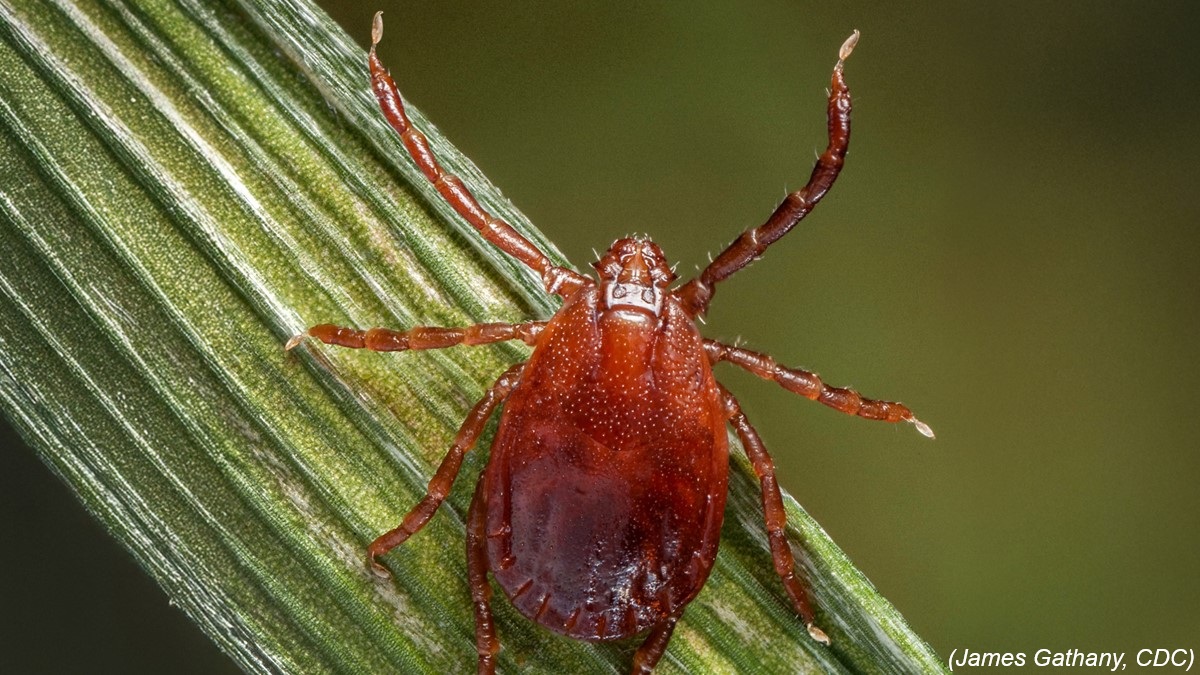
Asian longhorned ticks are very small, making early detection difficult. Adult ticks are typically only 2 to 3 millimeters long and 1 to 2 millimeters wide, appearing at first glance like tiny brown specks of dust. Nymphs and larvae are even smaller. Unfed ticks are light reddish-tan to dark reddish with brown markings, while engorged females turn grey-green with yellowish markings and can grow to the size of a pea. Male ticks are rare.
The tick’s reproductive biology compounds its invasive success. Asian longhorned tick populations in the United States are parthenogenetic, meaning an individual female can lay eggs without mating—essentially cloning herself to create the next generation. A single female can produce 1,000 to 2,000 eggs at a time, allowing a single tick to establish a new population. This is one reason the tick has successfully invaded new geographic regions.
“Mechanical transmission, I always say, is kind of like a dirty needle with wings,” shared Emily McDermott, an assistant professor in the Department of Entomology and Plant Pathology at the University of Arkansas. “Theileria can be mechanically transmitted because it is a blood-borne pathogen, and so theoretically, anything that breaks the skin is a means to transmit this. Things like horse flies are biting the animal and then quickly moving to another animal to bite, and that’s where there’s the potential to move that pathogen between animals without it actually infecting the insect.”
Protecting People and Pets from Tickborne Diseases
While the Asian longhorned tick poses a significant threat to livestock, it can also feed on humans and pets. The Centers for Disease Control and Prevention (CDC) has been actively investigating the disease threat posed by the spread of this exotic tick. The CDC notes that in other parts of the world, the Asian longhorned tick can transmit many types of pathogens common in the United States, and officials are concerned that this tick, which can cause massive infestations on animals, people, and in the environment, is spreading across the country.
The CDC recommends several steps everyone can take to prevent tick bites:
Use Environmental Protection Agency (EPA)-registered insect repellents containing DEET, picaridin, IR3535, oil of lemon eucalyptus (OLE), para-menthane-diol (PMD), or 2-undecanone. Always follow product instructions.
Treat clothing and gear with products containing 0.5 percent permethrin. Permethrin can be used to treat boots, clothing, and camping gear and remains protective through several washings. Alternatively, permethrin-treated clothing and gear are available for purchase.
Check your body and clothing for ticks upon return from potentially tick-infested areas, including your own backyard. Use a hand-held or full-length mirror to view all parts of your body. Place tick-infested clothes in a dryer on high heat for at least 10 minutes to kill ticks on dry clothing after you come indoors.
Shower soon after being outdoors. Showering within two hours of coming indoors has been shown to reduce your risk of getting Lyme disease and may be effective in reducing the risk of other tickborne diseases. Showering may help wash off unattached ticks and is a good time to do a thorough tick check.
Talk to your veterinarian about tickborne diseases in your area and prevention products for your dog.

Michigan Implements New Animal Movement Requirements
In a separate but related effort to protect animal health, the Michigan Department of Agriculture and Rural Development (MDARD) announced new domestic animal movement requirements designed to keep New World screwworm (NWS) out of the state. While no detections have been found in Michigan, confirmed infestations in Texas and New Mexico prompted proactive action to safeguard against negative economic impact and protect animal health.
Effective June 17, 2026, the updated requirements apply to certain warm-blooded domestic animals entering the state. The specific requirements vary based on the NWS status of the state or region of origin. MDARD is also launching a dedicated NWS webpage with resources for producers, pet owners, and veterinarians.
“Michigan is taking decisive action to protect the health of our livestock and pets from New World screwworm,” said MDARD Director Tim Boring. “These movement requirements are an important tool to keep this devastating pest out of our state. By staying vigilant, working closely with producers and veterinarians, and acting quickly when concerns arise, we can safeguard animal health and support the resilience of Michigan’s agriculture sector.”
State Veterinarian Dr. Nora Wineland emphasized the seriousness of the threat. “This parasitic fly poses a serious threat to the health of our livestock, pets and wildlife when cases go unnoticed, untreated and unreported,” Wineland said. “Producers regardless of size and pet owners need to put eyes on their animals daily to check for things like enlarging wounds or signs of irritation. NWS starts as a parasitic worm that can enter an animal through a small break in the skin or an exposed mucous membrane, so close inspection is vital to ensure suspect cases are identified, and appropriate actions are taken to treat animals and stop the spread of the pest.”
Under the new requirements, animals originating directly from an infested premises are prohibited from entering Michigan until that site is officially released from quarantine. The restrictions also outline requirements for wound care, preventative treatment, and documentation for animals originating from areas designated by the USDA as an NWS Infested Zone or Adjacent Surveillance Zone.
Poultry are exempt from the movement requirements, including hatching and table eggs, chicks under 5 days of age, and National Poultry Improvement Plan Types B, C, D, and J. Screwworm was first added to Michigan’s emergency reportable disease list nearly a decade ago, requiring anyone to report suspected cases to the State Veterinarian’s Office. Those who suspect an animal is infected with screwworm are urged to contact MDARD immediately at 800-292-3939 during daytime hours or 517-373-0440 after hours.
Ongoing Monitoring and Additional Resources
Cornell IPM continues to monitor the tick’s distribution, habitat selection, and impacts on livestock and animal health. Producers are encouraged to check livestock regularly for ticks, especially on the head, neck, flanks, back, armpits, groin, and under the tail. Animals showing low weight gain, lethargy, anemia, patchy hair coat, or poor condition should be checked closely, as even a few ticks can transmit disease.
For additional information and resources on the Asian longhorned tick, livestock producers can visit Cornell IPM’s website at https://cals.cornell.edu/integrated-pest-management/outreach-education/whats-bugging-you/asian-longhorned-tick. For updates on New World screwworm and movement requirements, visit MDARD’s new NWS information page or the USDA’s dedicated NWS webpage.
About the Author